
Power Wheelchair Battery Care and Charging Tips
A reliable battery routine turns plans into simple, repeatable days. The best results come from shallow daily charges, sensible storage, and hardware choices that make top-ups effortless at home, in hotels, and on the move. With UltimatePointCare you also get clear specs and responsive support throughout ownership—see the brand story on the about us page.
Wheelchair battery care for everyday range
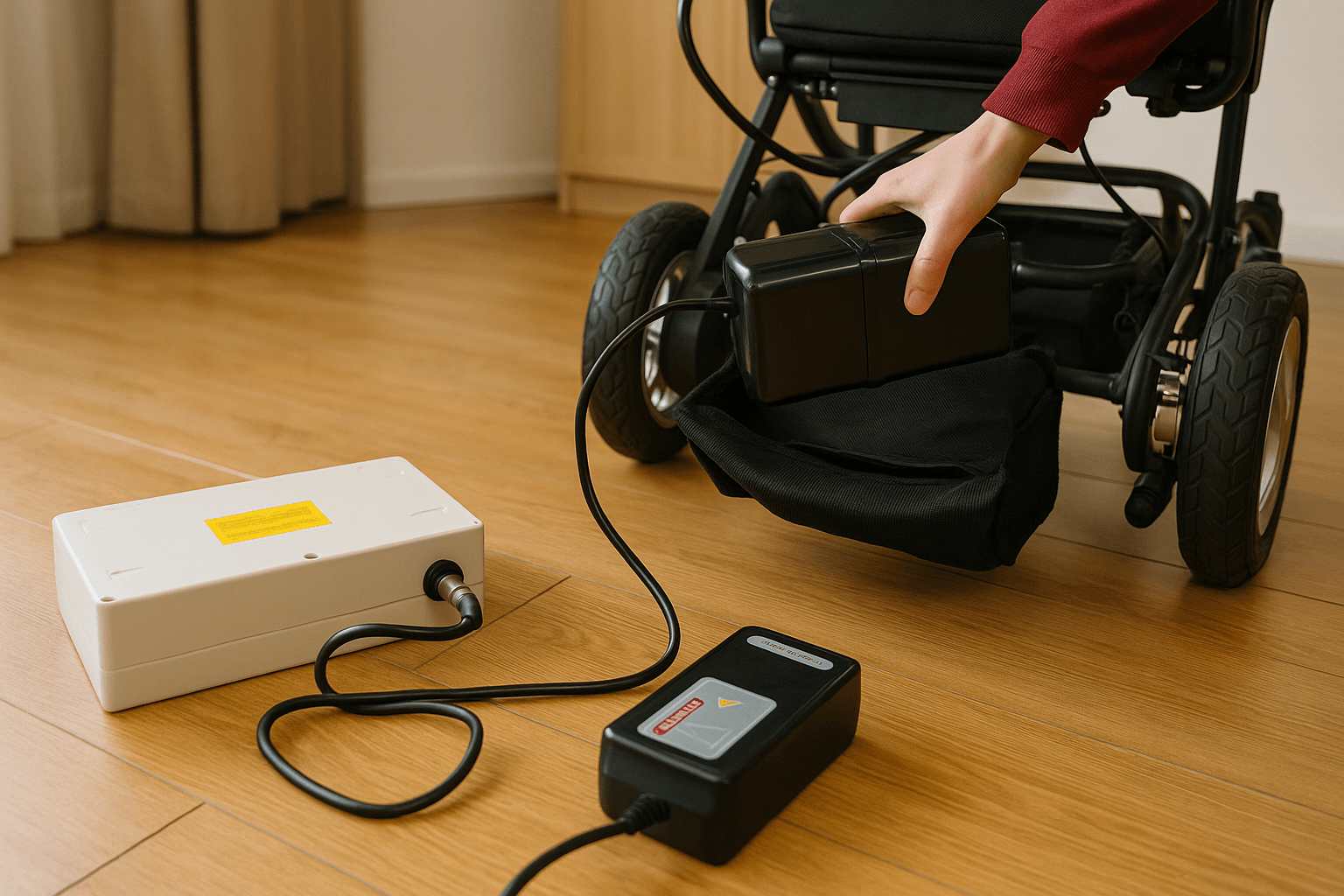
A healthy wheelchair battery likes consistency. Plug in after use, charge to full, then unplug rather than leaving the chair tethered for days. Avoid running to 0%—lithium cells prefer partial cycles—aiming to finish most days above 20–30%. Keep the charger and pack at room temperature, give the chair five to ten minutes to cool before charging after hills or hot weather, and keep connectors clean and dry. For apartments and travel, choose chairs with tool-free battery removal so you can bring the pack to a nearby outlet without moving the entire chair.
Power chair batteries setup that makes charging easy
Good habits stick when hardware helps. Look for accessible ports you can reach from the seated position, clear state-of-charge indicators, and chargers with tidy cable routing. Stock a spare in the glovebox or carry-on when your routine includes long clinic days or sightseeing blocks; rotating power chair batteries keeps each pack in a gentle cycle window and extends overall lifespan. If your meter seems to drop quickly, verify tire inflation or swap to puncture-proof tires—reduced rolling resistance prevents waste and preserves range.
Battery operated wheelchairs charging routine for travel
Airport days and hotel nights reward predictable routines. For battery operated wheelchairs, label watt-hours, pack the charger in an easy-to-reach pouch, and top up during natural breaks—breakfast, a café stop, or pre-dinner. Keep a lightweight extension with a switch if outlets sit behind furniture, and confirm international plug adapters ahead of time. After rain, towel connectors dry before charging; moisture trapped in ports is a common cause of inconsistent charge lights.
Troubleshooting power chair batteries quickly and safely
If charging feels slow or inconsistent, follow a short checklist before replacing parts. 1) Test the wall outlet with a phone charger. 2) Confirm the charger’s indicator behavior matches its manual. 3) Reseat the pack firmly; inspect pins for debris or bending. 4) Power-cycle the controller after a full charge. 5) Try a different outlet or cord to rule out wear. Persistent issues? Share the charger model and battery watt-hours with support so diagnostics move faster. Avoid rapid “on-off” plug cycles, which add heat without meaningful charge.
Storage rules for wheelchair battery health
Storing for a week or more? Park the pack around 40–60%, unplug the charger, and keep it cool and dry. Set a calendar reminder to top up monthly. Do not store fully empty or fully charged for long periods—both accelerate aging. If your climate is hot, charge overnight when ambient temperatures are lower, and keep chargers ventilated rather than covered by clothing or bags.
Budgeting the battery wheelchair price and total ownership
Smart budgeting looks beyond the pack itself. Compare battery wheelchair price with total ownership: a second battery for long days, a quality charger, puncture-proof tires to reduce waste, and a supportive cushion to minimize energy-draining posture adjustments. Category pages make it easy to align capacity with distance and terrain, and to decide whether a spare pack delivers more value than chasing a larger single battery.
Daily checklist for maximum range
Keep a simple five-point ritual: 1) Tire check and quick visual of connectors. 2) Gentle acceleration and brake-before-turn habit to cut waste. 3) Mid-day top-up during a natural stop if the gauge dips below half. 4) End-of-day charge to 100% and unplug. 5) Weekly wipe-down of ports and cables. Small habits like these add steady, repeatable miles without stressing the battery.