
How Does Big City Public Transit Work in a Wheelchair
Big-city transit can be fast and reliable in a wheelchair when you plan around three realities: step-free access from sidewalk to platform, predictable boarding and securement on the vehicle, and clear wayfinding between transfers. Once you know where elevators live, how ramps are deployed, and where to position yourself for safe travel, buses, subways, trams, and commuter rail become part of an ordinary day.
Map step-free routes and wheelchair accessible options
Start with the network map, then switch to the accessibility layer to reveal elevator locations, low-floor stops, bridge plates, and priority areas. Save two paths for each trip: your primary step-free route and a backup in case an elevator is out of service. For city-specific guides, service alerts, and planning checklists, browse wheelchair accessible options and note how agencies publish elevator status feeds and stop-level accessibility notes you can check before you leave.
Know where and how operators secure wheelchairs
On low-floor buses, board at the rear or the designated accessible door and position in the priority area facing forward or backward as the agency requires. Operators will deploy the ramp, request brakes, and apply straps or a docking arm if the vehicle uses them. Trains often rely on self-positioning in a marked area with a flip-down perch or backrest. Whether bus or rail, stable seating and reliable braking on your chair make a difference—browse secure wheelchairs with planted wheelbases, predictable low-speed control, and puncture-proof tires so starts, stops, and platform gaps feel calm.
Boarding, platform gaps, and ramp etiquette
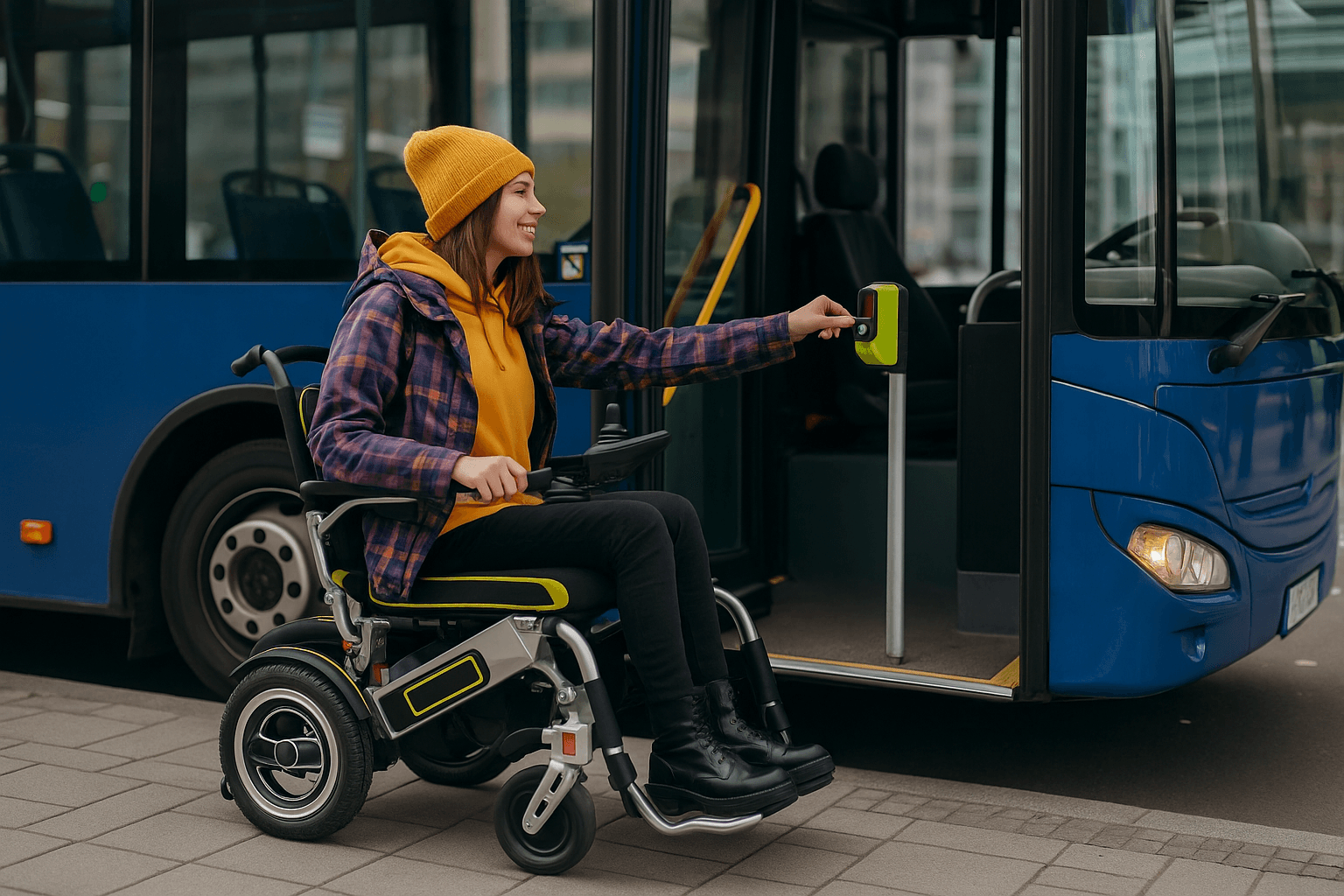
At street level, signal the driver early so there’s time to kneel the bus and deploy the ramp. On platforms, wait near the wheelchair emblem; some systems mark where the bridge plate will appear. If there’s a gap, align your casters straight, cross at a right angle, and let passengers alight before you board. Inside, lock your brakes when the vehicle is moving and keep bags low so they don’t swing into aisles during turns.
Transfers, elevators, and crowd navigation
Transfers become easy when you know three things in advance: which car or door is closest to the elevator at your destination, which mezzanine has lift access to the street, and where the accessible fare gates sit. Give yourself a margin at rush hour; letting one train pass can make boarding smoother and safer. If an elevator is out, station staff should offer an alternate route or assistance to the nearest working lift—build an extra five minutes into your plan so disruptions don’t cascade.
Fares, assistance, and service alerts
Most systems let you tap a contactless card at widened gates; keep your card in an easy-reach pocket. If you need help, use the call button by the gate or the intercom on the platform and state your destination and mobility device. Subscribe to elevator and accessibility alerts for your usual lines—getting a push notification in the morning is often the difference between a smooth commute and an unexpected detour.
Weather, surfaces, and real-world traction
Wet paint, metal grates, and polished platform tiles reduce grip. Slow before turns, brake in a straight line, and look for tactile paving to guide positioning at the edge. If your city uses cobblestones or brick paths around stations, larger rear wheels and solid tires help, as does a chair with smooth controller mapping so you avoid lurches in crowds.
Safety, etiquette, and small wins
Yield priority space to folks boarding behind you when possible, face the direction that gives you the most support, and keep cords and scarves tucked. If you ride with a companion, agree on hand signals for “stop,” “back,” and “ramp ready” so boarding is quick and calm. A small door-stop wedge in your bag can hold heavy station doors while you pass through.
A simple big-city transit routine
- Check elevator status and your backup route.
- Aim for the accessible door or car marker.
- Position in the priority area, set brakes, and use straps if available.
- Exit toward the elevator closest to your next connection.
- Re-check alerts during transfers to stay ahead of disruptions.
With a step-free plan, predictable securement, and a little buffer for crowds, big-city buses and trains become dependable, everyday tools—opening up commutes, appointments, and spontaneous trips across town.