
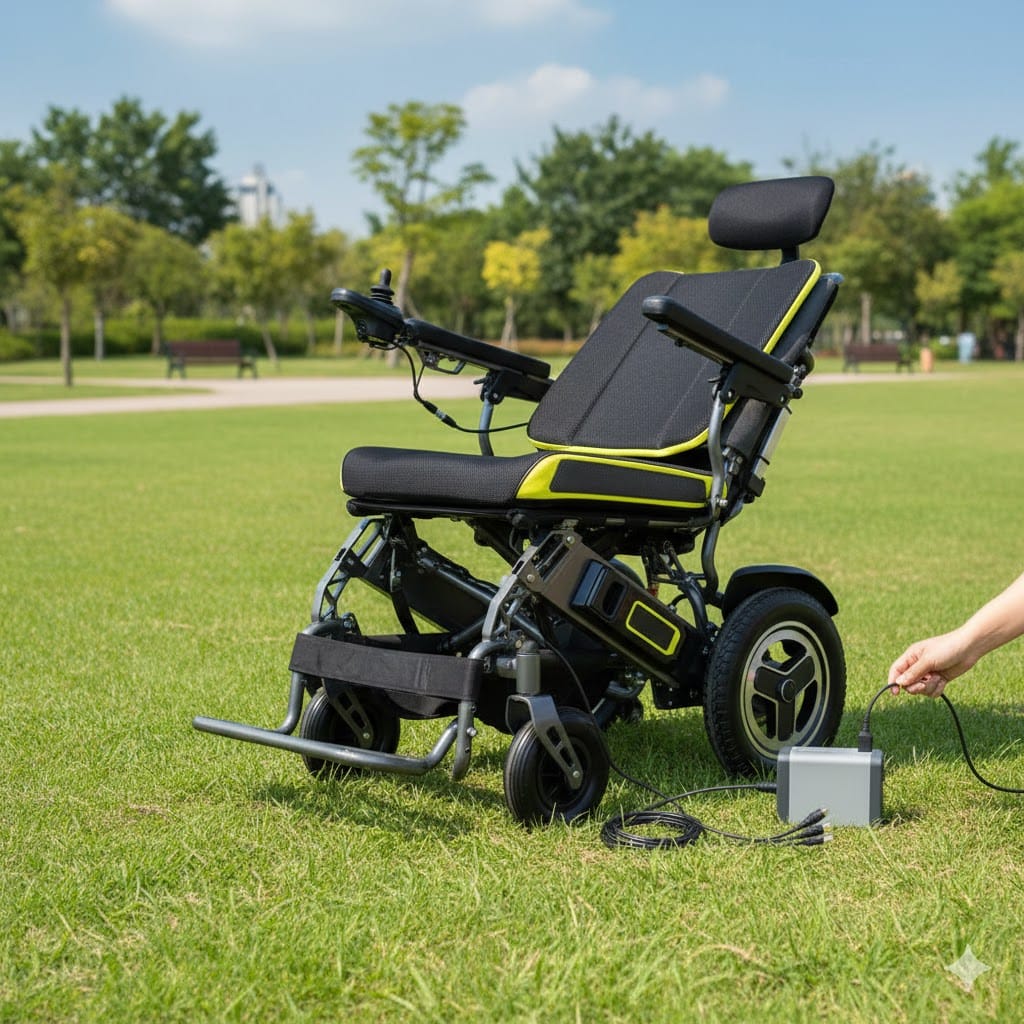
Battery Care and Charging on the Go for Travel Wheelchairs
Reliable range on travel days comes from three habits you can control anywhere: shallow daily charges, smart top-ups during natural breaks, and hardware choices that keep charging fast and reachable without moving the whole chair. Pair those habits with supportive seating—correct wheelchair armrest height and a stable head support—to ride longer with less fatigue and fewer “emergency” charges.
Choose the right battery wheelchair for travel routines
A travel-ready battery wheelchair should let you remove the pack tool-free, place the charge port within easy reach from the seat, and show clear state-of-charge. Models that fold in 30 seconds and roll like luggage make café or airport top-ups simple because you can park beside an outlet without blocking aisles. When comparing chairs, look beyond capacity alone—controllers that start and stop smoothly at walking speed reduce waste, so you cover more ground between charges with the same watt-hours.
Daily charge pattern that protects lifespan
Lithium batteries prefer partial cycles. After your ride, plug in, charge to full, then unplug; avoid sitting tethered for days. Try not to run to 0%—ending most days above 20–30% extends life. If you just climbed long ramps or rode in heat, let the pack cool five to ten minutes before charging. Keep ports clean and dry; moisture or lint in the socket is a common reason “the charger is on but nothing happens.”
Charging on the move without slowing your day
Plan top-ups around natural stops: breakfast, a museum café, or pre-boarding at the gate. Carry a compact extension with a switch and a short cable tie to secure the brick off the floor. Park where the outlet is on your joystick side so you don’t twist, and keep one spare fuse and a microfiber cloth in the pocket for quick port wipes after rain. If your itinerary mixes transit and rideshare, favor chairs with a suitcase-style fold so you can roll to power and plug in within seconds.
Comfort matters for real-world range
Good posture reduces energy-draining micro-corrections. Set wheelchair armrest height so elbows rest near 90° with relaxed shoulders; adjust footplates for a gentle knee bend without heel drag. When you expect long days, a chair with a headrest wheelchair setup helps you maintain neutral neck posture while charging or riding. If you need modular support, look for a head rest for wheelchair that adjusts for angle and depth and a secure wheelchair headrest attachment that doesn’t drift as you move. For travelers who swap between vehicles and venues, a detachable headrest for wheelchair keeps transfers quick while preserving all-day support.
Troubleshooting quick checklist before you replace parts
If you see “charging” lights but the gauge won’t rise, try this five-step flow: 1) test a different wall outlet, 2) fully seat the plug and inspect the port for bent pins or lint, 3) cool the pack and retry, 4) run one uninterrupted overnight charge (no on-off cycling), 5) reseat battery connectors until they click. Sudden “full” after minutes on a low battery often points to a pack at end-of-life rather than a charger fault.
Storage rules for trips and off-weeks
For layovers longer than a week, park around 40–60% and store cool and dry. Top up monthly if unused. Do not store fully empty or fully charged for long periods. After rain, towel connectors dry and let them air before you plug in—protecting ports is the fastest way to avoid “mystery” charging failures.