

Rehab Wheelchairs That Recline, Tilt, and Lift
Rehabilitation days are long on focus and short on spare energy. A well-chosen rehab wheelchair that reclines, tilts, and (in some setups) lifts the seat helps protect skin, manage tone, support breathing, and keep vision level—so therapy blocks, imaging appointments, and transfers feel predictable. The goal is a stable base, correct seating geometry, and adjustable head/neck support that stays put as you change position.
Why recline, tilt, and lift matter in rehab
Recline redistributes pressure and offloads the lower back; tilt-in-space maintains the hip angle while shifting load through the backrest; seat lift supports eye-level communication and reaching tasks without unsafe forward bends. A reclining wheelchair with headrest keeps the head neutral during these changes so neck extensor effort stays low and breathing remains efficient. If you need a foldable model that still prioritizes posture, see the headrest wheelchair options on RelaxaRide—designed to hold settings through repeated transfers.
Head and neck: choose the right support hardware
Start with a modular wheelchair head support system that you can fine-tune as therapy goals evolve. Many riders pair a base pad with a wheelchair headrest extension for added height and a wheelchair headrest with lateral support to control side drift during tilt. For transport or spasticity management, a wheelchair headrest with strap or separate wheelchair head support strap limits sudden flexion. If caregivers alternate configurations (home, clinic, vehicle), a detachable headrest for wheelchair speeds re-setup, and a robust wheelchair headrest attachment prevents “creep” during the day. Users who need more encompassing stability—such as those seeking quadriplegic wheelchair head support—should prioritize deeper contours and multi-point adjustability in a head rest for wheelchair package. If you’re shopping generically for a wheel chair with head rest, confirm that angle, depth, and height can be set independently, and that the pad tracks the backrest through the full recline range.
Get the base right: seat, foot, and wheelchair armrest height
Comfort starts with geometry. Set wheelchair armrest height so elbows rest near 90° with relaxed shoulders; adjust seat depth to support most of the thigh while clearing the popliteal fold; and set footplate length for a gentle knee bend without heel drag. This foundation reduces trunk sway and the micro-corrections that drain energy. When the base is correct, the headrest needs only light contact at the occiput rather than constant pressure on the neck.
Range and transfers on therapy days
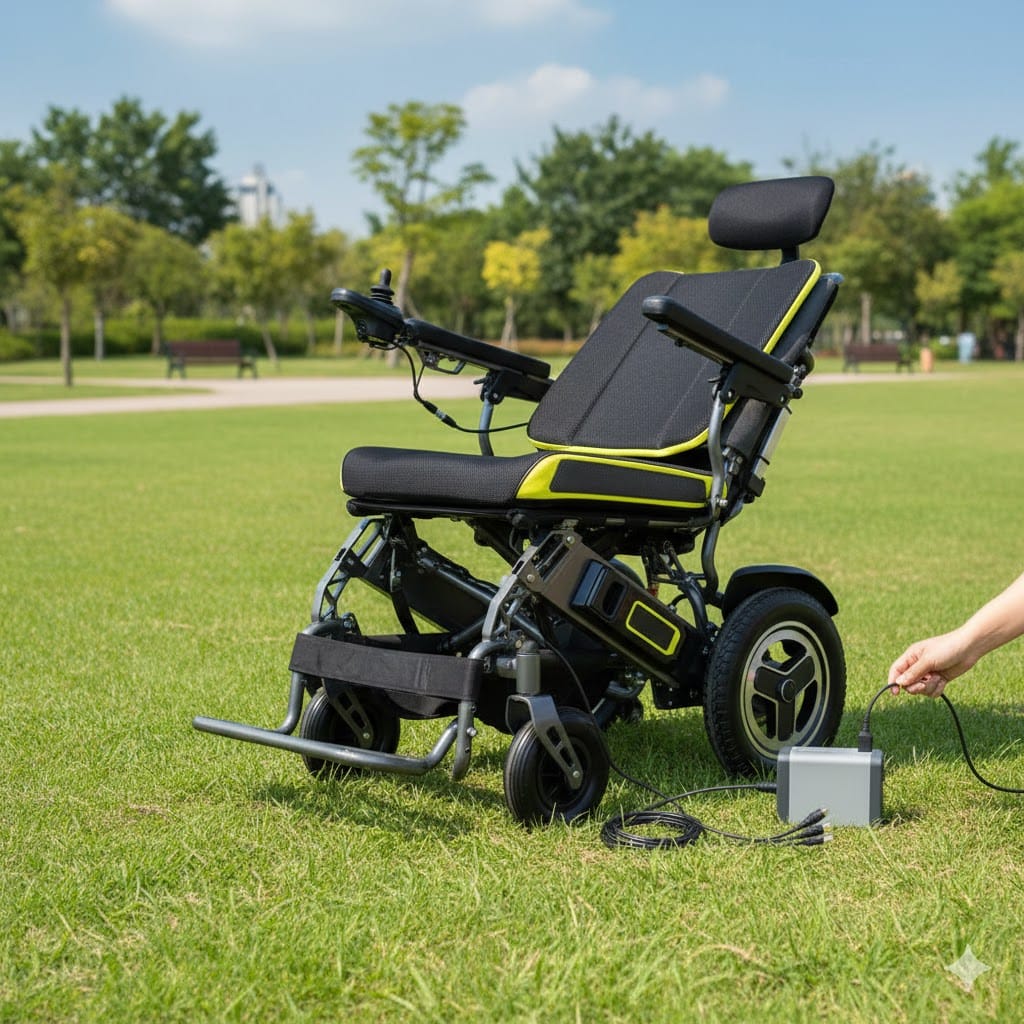
Rehab schedules often mean multiple short trips plus a long return. A compact battery wheelchair with tool-free pack removal and a reachable charge port keeps top-ups simple at clinics or cafés. Swift suitcase-style folds make vehicle transfers predictable and leave more time for actual therapy. If your day blends outdoor pavements with indoor corridors, puncture-proof tires and smooth controller mapping will extend practical range more than chasing a larger single battery.
Setup checklist for reclining rehab wheelchairs
- Pad placement: Center the head pad at the occiput; maintain neutral gaze without chin lift.
- Synchronize motion: Ensure the wheelchair headrest attachment tracks with recline/tilt so contact stays consistent.
- Armrests first: Dial in wheelchair armrest height before final headrest depth/angle.
- Transfers: Use a detachable headrest for wheelchair if vehicles or Hoyer lifts are part of the routine.
- Safety systems: Confirm electromagnetic brakes engage fully after each transfer and that anti-tips clear thresholds.
When to choose a reclining wheelchair with headrest
Select a reclining format if you:
- need scheduled pressure redistribution without leaving the chair,
- experience neck or shoulder fatigue mid-day,
- require stable vision for reading/therapy while changing position, or
- coordinate with caregivers who prefer predictable, repeatable positioning.
The RelaxaRide family provides headrest wheelchair compatibility and head rest for wheelchair options that hold alignment through recline, with hardware to add lateral wings, straps, or extensions as needs evolve.