

The Role of Pediatric Wheelchairs in a Child’s Growth and Independence
A well-chosen pediatric mobility device does more than move a child from A to B; it supports posture for learning, stabilizes the trunk and pelvis for safe reaching and play, protects skin during long school days, and gives families predictable routines for transport, therapy, and community outings. When clinicians and parents talk about pediatric wheelchairs they’re really discussing a development plan—frame geometry that matches growth, seating that distributes pressure without creating hotspots, controls a child can master without fatigue, and accessories that make transfers and daily care straightforward. Start by mapping real environments: classroom aisles, home doorways, playground surfaces, therapy rooms, and vehicle entries. Then match frame style to those routes. A compact pediatric folding wheelchair reduces transition friction across the week—out the door before the bell, into a minivan or rideshare, through school corridors, and back home—because it folds fast, locks securely, and stores without dominating limited space. For children who benefit from mid-day position changes, a pediatric reclining wheelchair helps redistribute pressure, ease the lower back, and sustain attention during longer lessons or therapy blocks, all while keeping shoulder reach and head control comfortable for reading and device use.
Control and propulsion should match the child’s motor abilities today and leave room for tomorrow’s goals. Some families start with a nimble manual setup and then transition to powered mobility when distances increase or upper-limb endurance limits participation; others begin with a compact pediatric power chair so the child can keep pace with peers on campus and in the community. In both cases, responsive low-speed handling and predictable braking matter more than top speed; the chair should track straight at walking pace, turn cleanly in tight aisles, and manage curb cuts without jolts. For short appointments, crowded venues, and travel days, a caregiver-friendly pediatric transport chair that is light to lift and quick to secure in vehicles can be the difference between “we’ll skip it” and “we’ll be there.” As children grow, adjustability protects fit: seat width to match hip breadth with seasonal clothing, seat depth that supports most of the thigh while clearing the popliteal fossa, back height aligned to trunk control, and footrest length that keeps a gentle knee bend without heel drag. These details keep alignment stable so energy goes to learning and play—not to fighting the chair.
Comfort is a daily habit built from materials and small adjustments. A supportive pediatric wheelchair cushion—contoured foam for stability, gel/fluid for shear management, air cells for micro-adjustable immersion, or hybrids that combine these—spreads load away from bony areas, manages heat and moisture, and reduces the micro-movements that cause fatigue. Pair that seating with breathable covers, non-slip foot positioning, and tires that grip wet ramps and playground paths so the child can approach tables, transfer to therapy mats, or line up with classmates without hesitation. If your child needs a lighter frame for lifting and storage, explore youth-sized builds within our youth wheelchair style range; if the priority is classroom agility and quick car transfers, choose a compact base that turns in narrow spaces and folds flat. Access to parts and service matters too: readily available batteries, tires, arm pads, and control modules keep school days and therapy sessions on track. For a quick orientation to our approach, including after-sales support and delivery details, see our shop overview UltimatePointCare: Your Trusted Mobility Online Shop, which explains how we handle sizing guidance, logistics, and follow-up for families building long-term solutions. You’ll also find childrens wheelchair accessories ideas—lighting, trays, bags, lateral supports—that make mornings smoother and field trips easier.
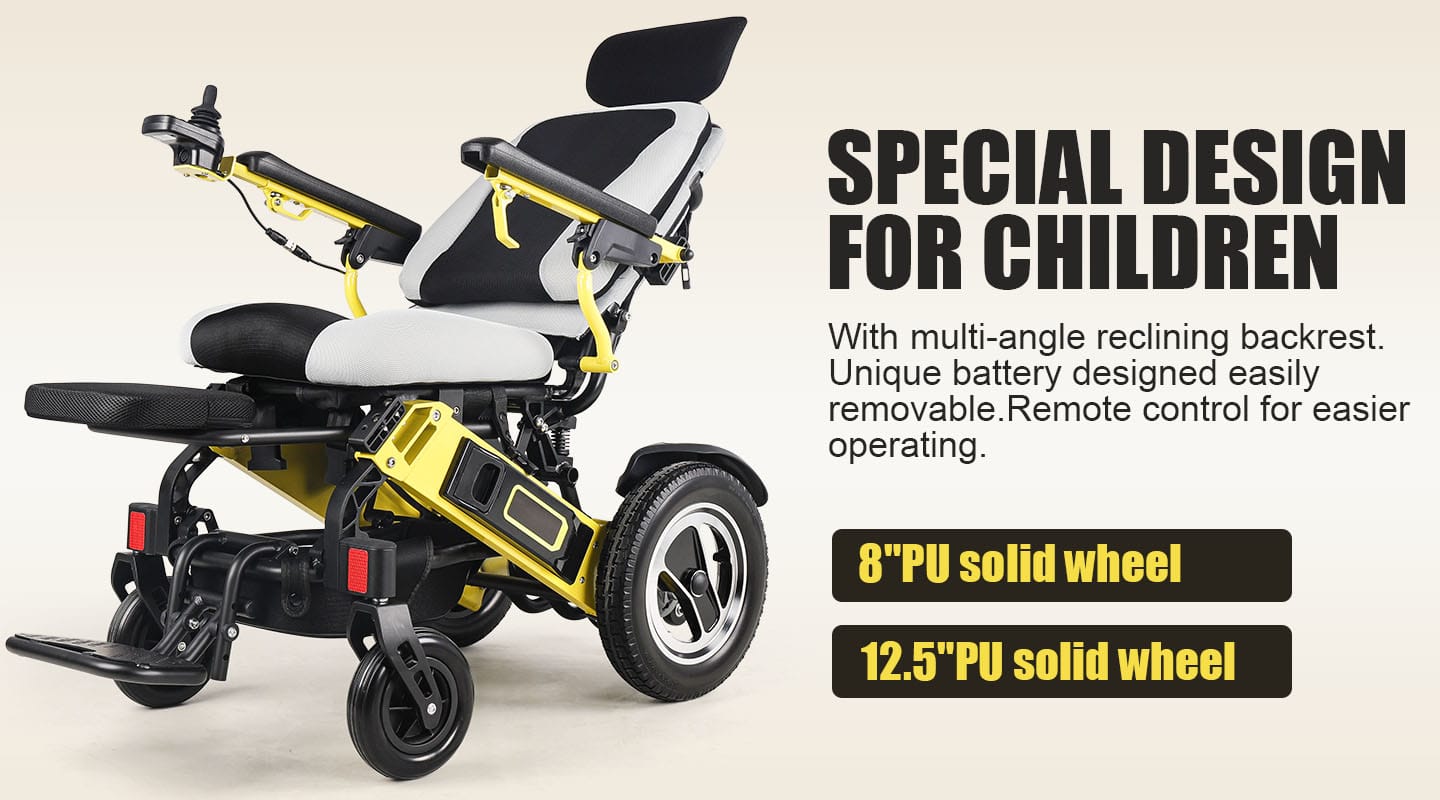
Independence grows when the chair “disappears” into the routine. That means easy transfers with flip-up armrests, seat heights that match classroom furniture, joystick or push-rim positions that don’t demand a forward lean, and batteries that charge predictably around homework and bedtime. As confidence increases, participation expands: getting to the library before the bell, joining classmates in the cafeteria line, exploring museums and parks on weekends. Whether you are refining an existing setup or choosing the first device, anchor the decision to the day you want your child to have—steady posture for learning, controlled movement in crowds, and reliable transport between home, school, and therapy. Then combine the right frame type from our Electric Wheelchairs hub with a growth-friendly folding option in Folding Power Wheelchairs, a lightweight campus-ready base in Lightweight Power Wheelchairs, or a position-change solution in Reclining Power Wheelchairs. When fit, comfort, and control align with real routes, pediatric mobility becomes a tool for growth: the child arrives less fatigued, engages more fully, and carries that independence into each new grade and milestone.